Introduction
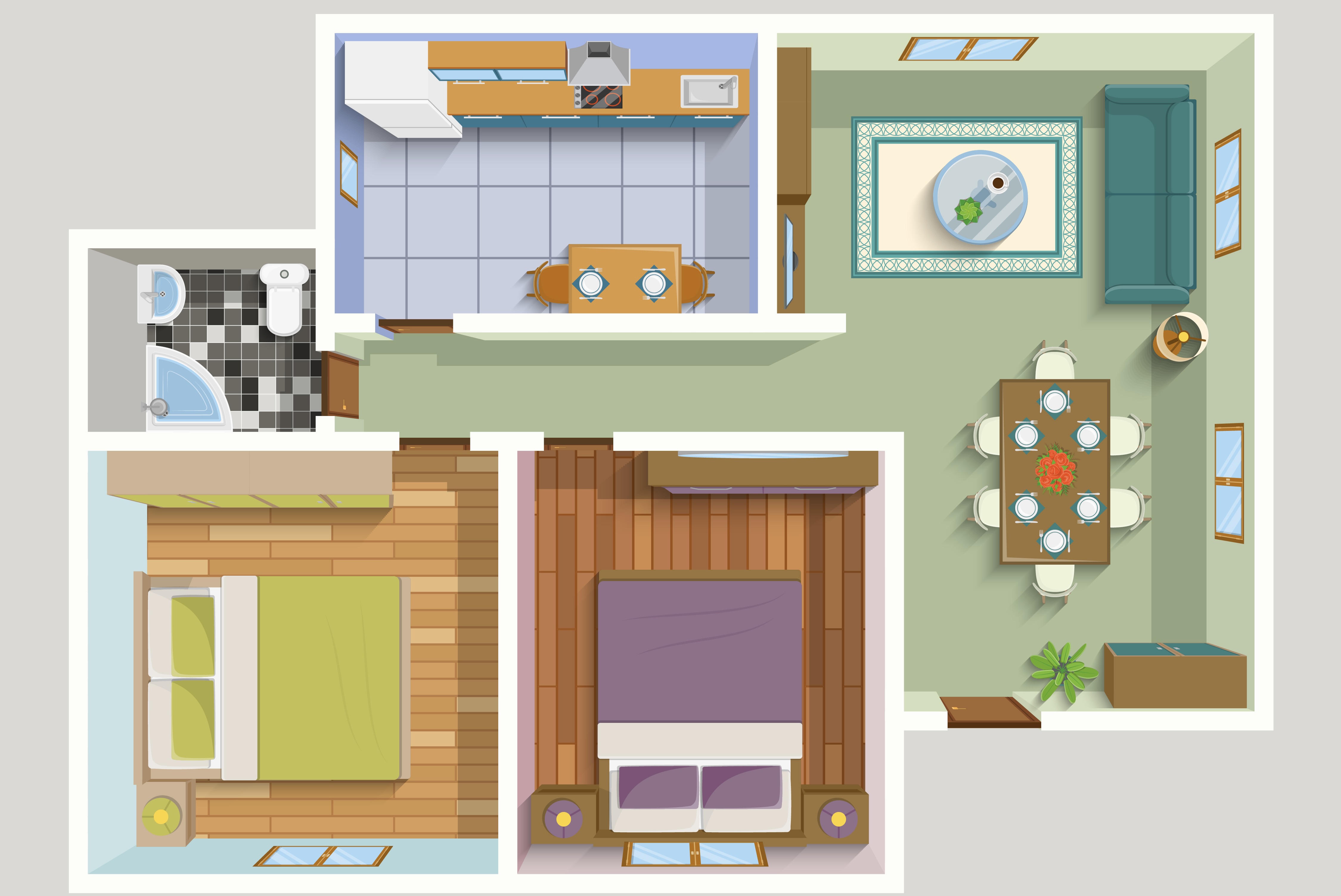
Indoor navigation remains a challenge due to GPS limitations and complex building layouts. Our system uses mmWave radar sensing to create high-resolution indoor maps and localize users. These maps support real-time navigation and accessibility guidance within grocery stores, shopping malls, and other indoor environments.
Related Work
Previous studies explored Wi-Fi and Bluetooth-based indoor positioning, LiDAR for mapping, and computer vision for obstacle detection. mmWave sensing offers high-resolution depth and localization capabilities, with robustness to lighting and clutter, making it suitable for dense indoor environments.
Methods
System Overview
The system combines mmWave radar data with floor plan priors and sensor fusion to generate 3D indoor maps. Real-time localization is achieved through signal reflections and path tracking, enabling user guidance to target locations like aisles or checkout counters.
Data Collection
mmWave radar scans were collected across multiple indoor spaces, covering open areas and cluttered aisles. The dataset includes reflection intensity, angle-of-arrival, and time-of-flight measurements for robust mapping and localization.
Data Processing
- Raw mmWave scans for 3D point cloud generation
- Filtered datasets to remove noise and dynamic objects
- Overlayed datasets combined with building floor plans
Navigation and Guidance
The system calculates optimal routes indoors using real-time localization. Accessibility features like ramps, wide aisles, and elevators are integrated into navigation paths for wheelchair users and mobility-impaired individuals.
Experimental Evaluation
Evaluation across multiple indoor spaces showed high localization accuracy, with an average error of 15 cm. Route guidance was successfully provided in dense aisle environments and around obstacles.
Key Insights
mmWave mapping is robust to lighting conditions and works in cluttered spaces where cameras or LiDAR might fail. Integration with floor plans improves navigation accuracy, while real-time updates allow the system to adapt to changing indoor layouts.
Publications
RESA: A Radar-Exclusive Spatial Assistant for Indoor mmWave Wheelchair Guidance
Authors: Noah Emmert∗, Demetrius Hullum Scott∗, Joseph Sanuk, Ryan Hardek, Nadim Mahmud†, Vaskar Raychoudhury†
Affiliation: Department of Computer Science & Software Engineering, Miami University, Oxford, OH, USA
Contact: {emmertnp, hullumdr, sanukjm, hardekrm, mahmudm2, raychov}@miamioh.edu
Conference: 2026 IEEE 23rd International Conference on Mobile Ad Hoc and Smart Systems (MASS)
Status: Accepted as a regular paper (Acceptance rate: 29.7%)
Conclusion & Future Work
Our study demonstrates the potential of mmWave sensing for indoor mapping and navigation. Future work will include integration with mobile devices, enhanced real-time user guidance, and expanded datasets covering diverse indoor environments like airports and hospitals.